Buy dropshipment.eu ?
We are moving the project
dropshipment.eu .
Are you interested in purchasing the domain
dropshipment.eu ?
domain@kv-gmbh.de · 0541-91531010
Buy dropshipment.eu ?
Why does 10 * log10(x) equal x?
The equation 10 * log10(x) equals x because it represents the conversion from logarithmic scale to linear scale. In this equation, log10(x) represents the power to which 10 must be raised to equal x. Multiplying this result by 10 scales the value to match the linear scale of x. Therefore, 10 * log10(x) equals x as it converts the logarithmic value back to its original linear value. **
Why does 10 * log10(x) result in x?
The formula 10 * log10(x) results in x because it is the inverse operation of taking the logarithm base 10 of x. When you take the logarithm base 10 of x, you are essentially finding the power to which 10 must be raised to equal x. Multiplying this result by 10 simply cancels out the division that occurs when taking the logarithm, resulting in x. **


Similar search terms for ISpring-HB18B-10-x
Top-Angebote
Products related to ISpring-HB18B-10-x:
-
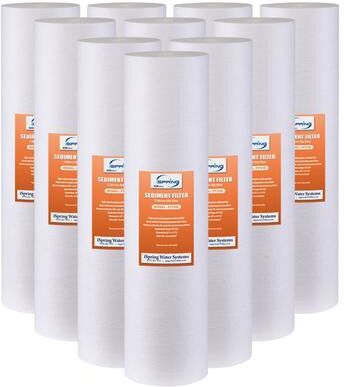
iSpring FP110X25 10 Micron Sediment Cartridges, 25-PackProtect Your Family and Household Appliance from Sediments: The FP series sediment filters are specially designed to remove sediments, dust, sand, large particles, silt, dirt, and rust from water.77,49 $*Shipping: 0,00 $Secure redirect to the provider
-
iSpring FP25BX10 5 Micron Sediment Cartridges, 10-PackPatented 4-layer gradient Melt-blown polypropylene, up to 3 times more efficient 20 inch (length) x 4.5 inch (O.D), universal replacement for industry standard 20 inch filter cartridges.This filter can also be used for pool and hottub. 5-micron...199,59 $*Shipping: 0,00 $Secure redirect to the provider
-
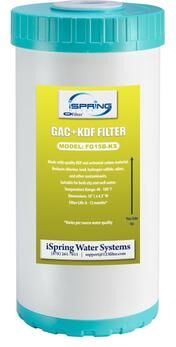
"iSpring GAC and KDF Carbon Filter Replacement Cartridge for US21B, 10"" x 4.5""""FG15B-KS 10"" x 4.5"" compound filter is designed to remove chlorine, lead, iron, mercury, hydrogen sulfide, chloride, chloramines, herbicides, odors, and other contaminants."45,99 $*Shipping: 0,00 $Secure redirect to the provider


-
'How can I remove x^10?'
To remove x^10 from an expression, you can divide the entire expression by x^10. This will effectively cancel out the x^10 term from the expression. Alternatively, if the x^10 term is part of a larger expression, you can use algebraic manipulation to factor out x^10 and then divide the expression by x^10. **
-
How do I solve e^x + 2e^x = 0 for e^x?
To solve the equation e^x + 2e^x = 0 for e^x, first factor out e^x from both terms to get e^x(1 + 2) = 0. This simplifies to 3e^x = 0. Then, divide both sides by 3 to get e^x = 0. Since e^x is always positive, there are no real solutions for e^x. Therefore, the equation e^x + 2e^x = 0 has no real solutions for e^x. **
-
Is the derivative of e^x also e^x?
Yes, the derivative of e^x is also e^x. This is because the derivative of e^x with respect to x is simply e^x. In other words, the rate of change of e^x with respect to x is equal to e^x. This property is one of the reasons why the exponential function e^x is so important in calculus and mathematical analysis. **
-
What is the difference between online commerce and retail commerce?
Online commerce refers to the buying and selling of goods and services over the internet, while retail commerce refers to the traditional brick-and-mortar stores where customers can physically visit and make purchases. Online commerce offers the convenience of shopping from anywhere at any time, while retail commerce provides the opportunity for customers to see, touch, and try products before making a purchase. Online commerce often involves lower overhead costs and can reach a wider audience, while retail commerce provides a more personalized and immediate shopping experience. **

Is ln(e^x) and e^(ln(x)) the same?
No, ln(e^x) and e^(ln(x)) are not the same. ln(e^x) simplifies to x, while e^(ln(x)) simplifies to x. This is because ln(e^x) is the natural logarithm of e raised to the power of x, which simplifies to x, and e^(ln(x)) is e raised to the power of the natural logarithm of x, which also simplifies to x. Therefore, ln(e^x) and e^(ln(x)) are equivalent and both simplify to x. **
What are the first and second derivatives of the functions a) f(x) = x^7 * e^x and b) f(x) = x^2 * e^x?
a) The first derivative of f(x) = x^7 * e^x is f'(x) = 7x^6 * e^x + x^7 * e^x. The second derivative is f''(x) = 42x^5 * e^x + 14x^6 * e^x + x^7 * e^x. b) The first derivative of f(x) = x^2 * e^x is f'(x) = 2x * e^x + x^2 * e^x. The second derivative is f''(x) = 2 * e^x + 2x * e^x + 2x * e^x + x^2 * e^x. **
Top-Angebote
Products related to ISpring-HB18B-10-x:
-
"iSpring HB18B 10"" x 4.5"" Water Filter Housing""Pressure Release Button 1"" inlet/outlet Package includes wrench to open and tighten the housings Fit standard size filtration replacement cartridges: 4.5""x10"" Maximum Temperature: 100DegreeF (37.8DegreeC) Maximum Pressure: 90 psi (6.2 bar)..."56,49 $*Shipping: 0,00 $Secure redirect to the provider
-
"iSpring HC16FP15X1 10"" Housing with Sediment Filter""Size: 3/4"" Stainless Steel Reinforced Inlet/Outlet Connectors Fits 10""x2.5"" Standard Filter Cartridges Helps to Protect Residential Appliances and Home Pluming from Sediment, Rust, Scale, Dirt, Coarse Sand, Sand, Silt, Bad Taste, Odor, Aesthetic and…"33,19 $*Shipping: 0,00 $Secure redirect to the provider
-
iSpring FP110X25 10 Micron Sediment Cartridges, 25-PackProtect Your Family and Household Appliance from Sediments: The FP series sediment filters are specially designed to remove sediments, dust, sand, large particles, silt, dirt, and rust from water.77,49 $*Shipping: 0,00 $Secure redirect to the provider
-
Why does 10 * log10(x) equal x?
The equation 10 * log10(x) equals x because it represents the conversion from logarithmic scale to linear scale. In this equation, log10(x) represents the power to which 10 must be raised to equal x. Multiplying this result by 10 scales the value to match the linear scale of x. Therefore, 10 * log10(x) equals x as it converts the logarithmic value back to its original linear value. **
-
Why does 10 * log10(x) result in x?
The formula 10 * log10(x) results in x because it is the inverse operation of taking the logarithm base 10 of x. When you take the logarithm base 10 of x, you are essentially finding the power to which 10 must be raised to equal x. Multiplying this result by 10 simply cancels out the division that occurs when taking the logarithm, resulting in x. **
-
'How can I remove x^10?'
To remove x^10 from an expression, you can divide the entire expression by x^10. This will effectively cancel out the x^10 term from the expression. Alternatively, if the x^10 term is part of a larger expression, you can use algebraic manipulation to factor out x^10 and then divide the expression by x^10. **
-
How do I solve e^x + 2e^x = 0 for e^x?
To solve the equation e^x + 2e^x = 0 for e^x, first factor out e^x from both terms to get e^x(1 + 2) = 0. This simplifies to 3e^x = 0. Then, divide both sides by 3 to get e^x = 0. Since e^x is always positive, there are no real solutions for e^x. Therefore, the equation e^x + 2e^x = 0 has no real solutions for e^x. **
Similar search terms for ISpring-HB18B-10-x
-
iSpring FP25BX10 5 Micron Sediment Cartridges, 10-PackPatented 4-layer gradient Melt-blown polypropylene, up to 3 times more efficient 20 inch (length) x 4.5 inch (O.D), universal replacement for industry standard 20 inch filter cartridges.This filter can also be used for pool and hottub. 5-micron...199,59 $*Shipping: 0,00 $Secure redirect to the provider
-
"iSpring GAC and KDF Carbon Filter Replacement Cartridge for US21B, 10"" x 4.5""""FG15B-KS 10"" x 4.5"" compound filter is designed to remove chlorine, lead, iron, mercury, hydrogen sulfide, chloride, chloramines, herbicides, odors, and other contaminants."45,99 $*Shipping: 0,00 $Secure redirect to the provider
-
"iSpring Iron and Manganese Reducing Water Filter, Replacement Cartridge for WGB21BM, 10""x 4.5"""iSpring FM15B is specially designed for iron & manganese removal, reducing iron (Max 3.0 ppm down to 0.01 ppm) and manganese (Max 1.0 ppm down to 0.01 ppm).56,69 $*Shipping: 0,00 $Secure redirect to the provider
-
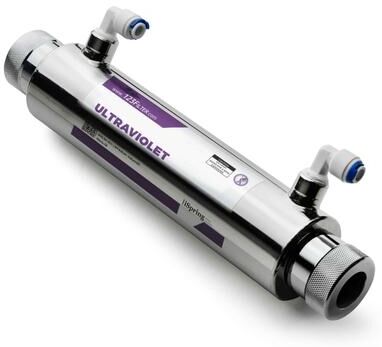
iSpring UVF11B 10-Inch UV Ultraviolet Filter, 11W 220V220V 11W UV lamp in stainless steel chamber Built-in flow sensor switch Complete ADD-ON Kit, can be added to most RO systems as a final stage to the system Flow rate: 1GPM; Last 8,000 hours169,99 $*Shipping: 0,00 $Secure redirect to the provider
-
Is the derivative of e^x also e^x?
Yes, the derivative of e^x is also e^x. This is because the derivative of e^x with respect to x is simply e^x. In other words, the rate of change of e^x with respect to x is equal to e^x. This property is one of the reasons why the exponential function e^x is so important in calculus and mathematical analysis. **
-
What is the difference between online commerce and retail commerce?
Online commerce refers to the buying and selling of goods and services over the internet, while retail commerce refers to the traditional brick-and-mortar stores where customers can physically visit and make purchases. Online commerce offers the convenience of shopping from anywhere at any time, while retail commerce provides the opportunity for customers to see, touch, and try products before making a purchase. Online commerce often involves lower overhead costs and can reach a wider audience, while retail commerce provides a more personalized and immediate shopping experience. **
-
Is ln(e^x) and e^(ln(x)) the same?
No, ln(e^x) and e^(ln(x)) are not the same. ln(e^x) simplifies to x, while e^(ln(x)) simplifies to x. This is because ln(e^x) is the natural logarithm of e raised to the power of x, which simplifies to x, and e^(ln(x)) is e raised to the power of the natural logarithm of x, which also simplifies to x. Therefore, ln(e^x) and e^(ln(x)) are equivalent and both simplify to x. **
-
What are the first and second derivatives of the functions a) f(x) = x^7 * e^x and b) f(x) = x^2 * e^x?
a) The first derivative of f(x) = x^7 * e^x is f'(x) = 7x^6 * e^x + x^7 * e^x. The second derivative is f''(x) = 42x^5 * e^x + 14x^6 * e^x + x^7 * e^x. b) The first derivative of f(x) = x^2 * e^x is f'(x) = 2x * e^x + x^2 * e^x. The second derivative is f''(x) = 2 * e^x + 2x * e^x + 2x * e^x + x^2 * e^x. **
* All prices are inclusive of VAT and, if applicable, plus shipping costs. The offer information is based on the details provided by the respective shop and is updated through automated processes. Real-time updates do not occur, so deviations can occur in individual cases. ** Note: Parts of this content were created by AI.